

How To Tell If An Oxygen Sensor Is Failing
Like any component of your Subaru, sensors can wear out due to heat cycles and thousands of miles of use. These electronic sensors are very close to the engine's combustion process and the high heat can cause premature failure. In some cases, you will be able to tell when your oxygen sensors may be failing (like in the case of steering knuckles, which we highlight in this article), but other times it’s not as easy to identify.
When an oxygen sensor fails, your car’s computer is unable to detect changes in the fuel mixture. If your engine is receiving improper fuel mixture, it can cause multiple performance issues. Issues with air and fuel ratios due to the failed sensor might include:
- A rough or uneven idle
- Slower acceleration
- Engine running hot
- Starting troubles
- Strong smell of gasoline at idle
How to Diagnose A Failed Oxygen Sensor
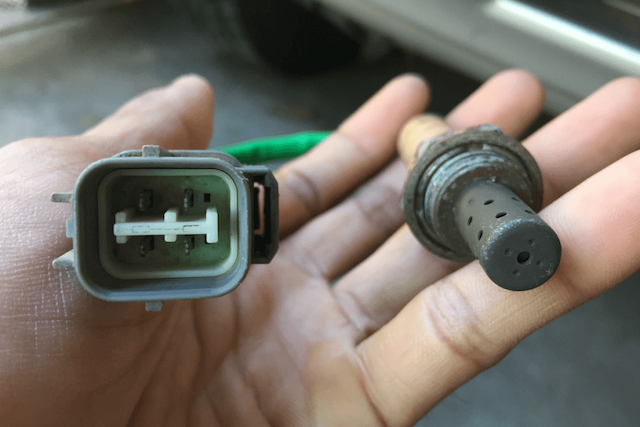
Image Credit: ProtectMyCar
One of the easiest ways to determine if one of your Subaru’s oxygen sensors has a problem is to use a code reader (also called a scan tool or OBDII reader). The tool plugs in under your dashboard. The code reader will not tell you if a sensor is bad or good, it will only tell you if the sensor is reading improperly. This can save you some time in identifying which oxygen sensor has failed.
Note: Your Subaru can have between one and four oxygen sensors throughout the exhaust system. This number varies depending on the engine and vehicle. Refer to your Subaru service manual to find how many sensors your car has and where in the exhaust they are located.
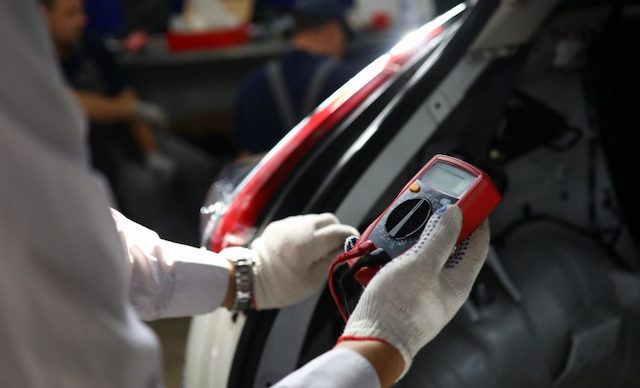
Another way to diagnose your Subaru’s oxygen sensors is to check the voltage output at each individual sensor with a digital voltmeter. Checking these sensors is an easy process and should take between 10 and 30 minutes.
Checking Voltage Signals
- Idle the engine or drive the car for around 20 minutes to get everything up to operating temperature.
- Put on a long sleeve shirt and thick gloves to avoid burning yourself on the hot exhaust.
- Optional: Lift your vehicle with jack stands or a car lift.
- Set your voltmeter to the millivolt DC setting.
- Connect your voltmeter to the oxygen sensor and read the voltage output. Oxygen sensors fluctuate from 100mV to around 900mV. Anything beyond this range is an indicator of a failed sensor. The sensor may also show a constant reading with no fluctuation, if this happens either the sensor has failed or there is another engine issue.
Continue the diagnostic process below if your voltmeter reads below 100mV or above 900mV.
Make Engine Run Lean
For this test you will be subjecting the sensor to more air than the sensor usually detects. To add more air to the engine:
- Disconnect the PCV valve at the intake manifold.
- Turn the engine on and check the voltmeter reading. It should read around 200mV. If the reading is higher, or the sensor is slow to react then the oxygen sensor has failed and should be replaced.
- Repeat for each sensor.
- Turn the engine off and reconnect the PCV valve.
If the oxygen sensor is reading accurately during these initial steps, the next step would be to run the car with more fuel than air.
Make Engine Run Rich
- Locate the air intake and disconnect the plastic ducting.
- Partially block the air filter with a rag. (Be sure to block the air in front of the air filter, so the rag doesn’t get sucked into the intake.)
- Turn the engine on and check the voltmeter readings on the oxygen snesors. This time they should be reading close to 800mV. If the reading is slow to react or isn’t around 800mV the sensor should be replaced.
- Repeat for each sensor
- Turn the engine off, remove the rag and reconnect the air ducting.
If you’ve found your Subaru oxygen sensor or sensors need to be replaced, you can easily change them out at home. You can find oxygen sensors for many Subaru models here.