

How To Check Subaru Transmission Fluid
Transmission fluid is critical for keeping your Subaru’s transmission running smoothly, but it doesn’t last forever. Depending on your vehicle’s model, driving habits, and transmission type, you’ll need to replace it every 30k to 100k miles - or sooner if you frequently tow or drive in extreme conditions. Modern Subaru vehicles, especially those with Continuously Variable Transmissions (CVTs), have unique fluid requirements that make regular checks even more important.
This guide will walk you through why and how to check your Subaru’s transmission fluid, ensuring optimal performance and longevity.
Why Regular Transmission Fluid Checks Are Essential

Subaru transmission maintenance is essential to keeping your ride running smoothly. Whether you drive a traditional automatic, manual, or CVT, your Subaru relies on fluid to lubricate and cool its many moving parts, like gears, valves, and clutches. Over time, these parts generate debris that contaminates the fluid, reducing its ability to protect the transmission. This is especially true for modern CVTs, which are common in newer Subaru models like the Outback, Forester, and Ascent. CVTs use specialized fluids to handle their unique chain or belt-driven systems, and degraded fluid can lead to costly repairs. If the transmission fluid degrades too much, you might notice symptoms like:
- Hard or jerky shifts
- Difficulty engaging gears
- Thumping or slipping between gears
- Sluggish acceleration
- Whining, grinding, or humming noises
- Dashboard warning lights (e.g., check engine or transmission-specific alerts)
For Subaru CVT maintenance, checking the fluid every 6 months or when symptoms appear is a smart move. Regular checks help you catch issues early, saving you from expensive repairs and extending your transmission’s life. Always consult your owner’s manual for model-specific intervals, as Subaru recommends fluid changes as early as 25,000 miles for CVTs under severe driving conditions like towing or stop-and-go traffic.
How To Check The Transmission Fluid In Your Subaru
Checking the transmission fluid in your Subaru is straightforward and takes just a few minutes. Here’s a step-by-step guide for both traditional automatics and CVTs:
- Warm Up the Engine: Start your Subaru and let it reach normal operating temperature. Monitor the temperature gauge on the instrument cluster - when the needle is in the middle, the engine is ready. For newer models with a CVT, some Subarus have a transmission fluid temperature sensor gauge to confirm optimal warmth. Or, take your car out and drive a few miles to speed up the process.
- Park on a Level Surface: Ensure your vehicle is on flat ground for an accurate reading.
- Cycle Through Gears: With the engine idling, shift through each gear position (including Park and Neutral) to circulate the fluid, then return to Park.
- Locate the Dipstick: Open the hood and find the transmission fluid dipstick, typically a looped handle near the back of the engine. Be careful not to confuse it with the engine oil dipstick. Note: Some newer Subaru CVT models (e.g., 2020+ Outback or Forester) may lack a dipstick, requiring a check via the transmission’s fill plug or a professional service. Consult your owner’s manual for specifics.
- Check the Fluid: Pull the dipstick, wipe it clean with a rag, reinsert it fully, then pull it out again to read the level. For CVT models without a dipstick, you may need a mechanic to check the transmission fluid level through the fill plug.
Inspecting Your Subaru’s Transmission Fluid
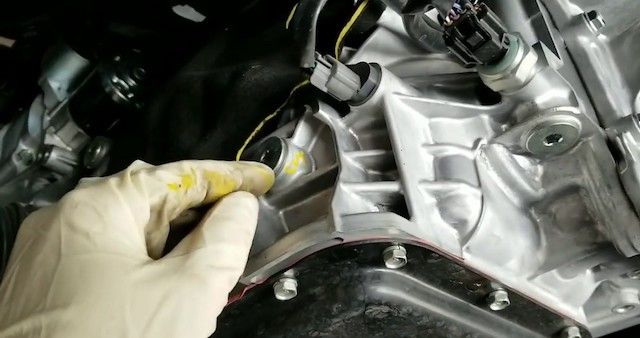
Image Credit: subtledriver
Once you’ve accessed the fluid, here’s how to evaluate it:
- Fluid Level: The fluid should be between the upper and lower marks on the dipstick. If it’s below the lower mark, add the recommended fluid (check your manual for the correct type, e.g., Subaru ATF-HP or CVT fluid). Low fluid may indicate a leak, so consider a professional inspection.
- Color and Smell: Healthy transmission fluid is light red or pink and semi-transparent with a slightly sweet smell. CVT fluid may appear clearer but should still be clean. If it’s dark brown, black, opaque, or smells burnt, it’s time for a flush. Cloudy fluid could signal contamination, requiring immediate attention.
- Consistency: Rub the fluid between your fingers (with gloves). It should feel smooth, not gritty. Gritty fluid indicates debris and requires a flush.
Tips For A Transmission Fluid Flush
When it’s time to replace the fluid, consider these tips for a Subaru transmission fluid change:
- Replace the Filter: Many Subaru automatics and CVTs have a transmission filter that should be replaced during a flush to prevent clogs. Check your model’s requirements.
- Use the Right Fluid: Subaru CVTs require specific fluids like Subaru High Torque CVT Fluid or Lineartronic CVT Fluid. Using the wrong type can damage the transmission and void warranties.
- Know Your Capacity: Overfilling can cause foaming and poor performance. Refer to your owner’s manual for your Subaru’s exact fluid capacity.
- Consider Professional Service: For CVT models without dipsticks or complex flush procedures, a certified Subaru technician ensures accuracy and proper disposal of old fluid.
OEM Parts From SubaruPartsPlus Keep Your Subaru Running Strong
Regularly checking your transmission fluid is a simple way to protect your Subaru’s performance and avoid costly repairs.
Got questions about your Subaru transmission, transmission fluid checks, or need help with a flush? Contact us today, and shop online with SubaruPartsPlus for genuine OEM Subaru parts today!