

Roof Rails vs. Crossbars: What Do You Need To Carry Gear?
Whether you are planning a weekend trip to the mountains or hauling kayaks to the coast, your Subaru is always up for the task. When you need to carry bulky gear or extra equipment, rooftop storage is always an option.
However, many drivers get confused by the terminology around rooftop hauling and just how much stuff you can safely transport. Let's cover the differences between roof rails and crossbars as well as how to use them correctly.
Understanding Roof Rails
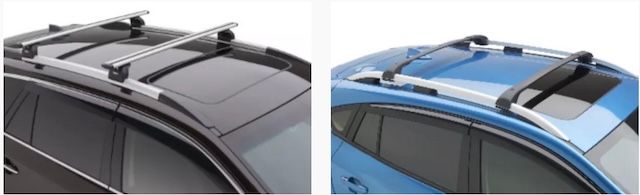
Roof rails are the foundation of your vehicle’s overhead storage system. These components run from the front to the back of the vehicle along the roofline. On many Subaru models, such as the Outback and Forester, these are factory-installed and integrated into the vehicle’s design.
- Orientation: They run parallel to the length of the car.
- Function: They serve as the attachment points for crossbars but should not be used to hold gear on their own.
- Types: Subaru offers various styles, including raised rails and flush rails, depending on the trim level.
Genuine Subaru roof rails are engineered to integrate seamlessly with your vehicle’s structural frame for maximum stability.
The Role Of Crossbars
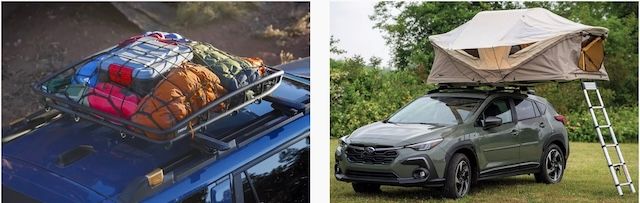
If roof rails are the foundation, crossbars are the platform. These bars run side-to-side across the roof, between the roof rails. You cannot safely mount a cargo box, bike rack, or ski carrier without a solid set of crossbars.
- Orientation: They run perpendicular to the roof rails.
- Versatility: They are often adjustable, allowing you to change the spread to accommodate different gear sizes.
- Necessity: Most rooftop accessories require crossbars for secure attachment.
Pre-Installed Rails: Which Subaru Models Have Them?
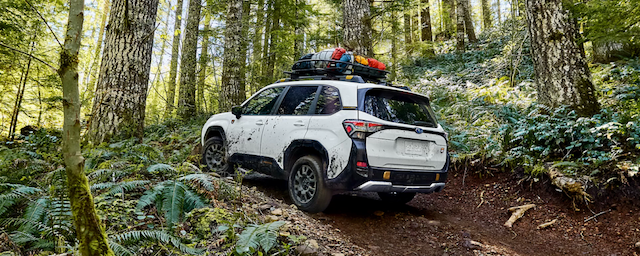
Most Subaru SUVs and crossovers come equipped with roof rails from the factory, but the configuration varies by trim. The Subaru Outback is unique because it features an integrated system where the crossbars are built directly into the rails and can swing out when needed.
- Standard Equipment: The Outback, Forester, Crosstrek, and Ascent typically feature raised or flush roof rails on most trims.
- Base Trims: Some Base trim levels (particularly on the Crosstrek or Impreza) may come with a 'naked' roof to provide a lower entry price.
- The Wilderness Advantage: Wilderness editions of the Outback, Forester, and Crosstrek feature heavy-duty reinforced rails designed to support higher static loads, such as rooftop tents.
Can You Install Rails If Your Car Didn't Come With Them?
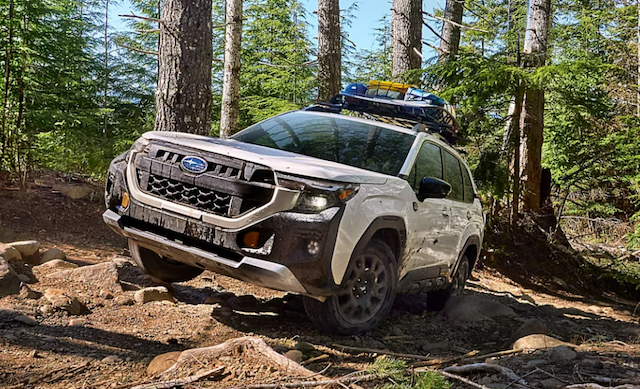
If your Subaru didn’t come with roof rails, you might wonder if you can add OEM rails later. This may be possible if your Subaru has mounting points hidden under the weatherstripping. Installing Genuine Subaru OEM roof rails on a vehicle without the mounting points is a major undertaking. It usually requires dropping the interior headliner and drilling into the roof.
OEM Approved Aftermarket Solutions: For vehicles without factory rails, some brands like Thule offer 'fixed point' or 'naked roof' kits. These use specialized clips or bolts that attach to pre-set mounting points hidden under the roof's weather stripping. Only use aftermarket solutions that have been approved by Subaru:
- Thule Crossbar Set
- Thule Bike Carrier
- Thule Extended Crossbars
- Thule Roof Crossbars
- Thule Kayak Carrier
- Thule Crossbar Set Aero Extended
Why Choose Genuine OEM Subaru Accessories?
When shopping for hauling equipment, you may see aftermarket options. However, opting for genuine Subaru parts ensures you are getting equipment designed specifically for your model’s aerodynamics and weight distribution.
- Aerodynamic Design: OEM crossbars are wind-tunnel tested to reduce wind noise and drag.
- Durability: Constructed from high-quality materials, they are built to withstand years of UV exposure and harsh weather.
- Perfect Fit: Subaru-specific crossbars mount directly to your rails without the need for awkward adapters.
Subaru OEM accessories offer the best protection against weathering and UV damage, ensuring your gear stays secure for years to come.
Subaru Roof Weight Capacity Guide
Before loading up, it is vital to check your vehicle's specific load limits. Wilderness models are designed to be even more capable off-road, and have more ground clearance, all-terrain tires, and a more rigid ladder-type roof rail capable of handling heavier loads.
| Subaru Model | Dynamic Load Capacity | Static Load Capacity |
|---|---|---|
| Outback (Standard) | 150 lbs | 600 lbs |
| Outback Wilderness | 220 lbs | 800 lbs |
| Forester (Standard) | 176 lbs | 700 lbs |
| Forester Wilderness | 220 lbs | 800 lbs |
| Crosstrek (Standard) | 176 lbs | 700 lbs |
| Ascent | 176 lbs | 700 lbs |
Exceeding the limits listed above can affect vehicle handling and safety. Please refer to your owner’s manual for exact figures for your Subaru model. Additionally, always ensure your crossbars are tightened to factory specifications to maintain the highest level of safety on the highway.
Always Choose OEM Subaru Roof Rails and Crossbars For Your Vehicle
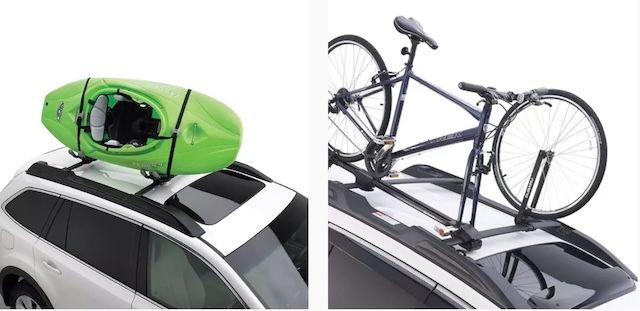
To sum up, roof rails are the necessary framework you need if you want to carry items on your Subaru’s roof. Crossbars are needed as the mounting points for your gear and equipment. For Subaru models that didn’t come from the factory with roof rails, always go with OEM-approved aftermarket solutions like those listed above.
SubaruPartsPlus.Com is the e-commerce parts department of a family-owned Subaru dealership that has been in business since 2005. Our staff are passionate Subaru enthusiasts with parts knowledge that is second to none. All OEM parts are backed by Subaru's manufacturer warranty, so get in touch with our team if you have any questions, and order online to get your OEM parts at a great price today!