

Will Replacing Your PCV Valve Reduce Oil Consumption?
If you’ve noticed your Subaru is thirsty for more oil than usual between changes, there may be a simple solution that is often overlooked. While many owners fear the problem may stem from the head gasket or piston ring issues, the culprit may be a much smaller and significantly cheaper item to fix.
Sometimes a stuck Positive Crankcase Ventilation (PCV) valve can lead to excessive oil consumption in several Subaru models. A PCV valve is one of the most overlooked components during a standard tune-up, yet it plays an important role in engine health.
What is a PCV Valve?
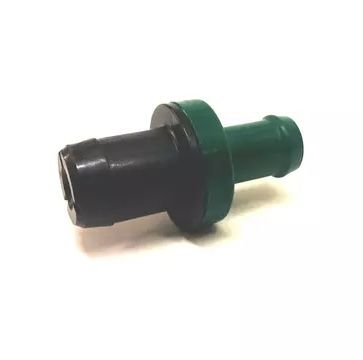
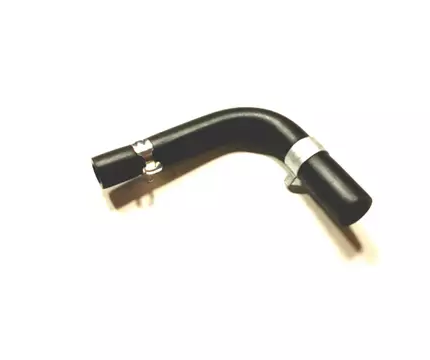
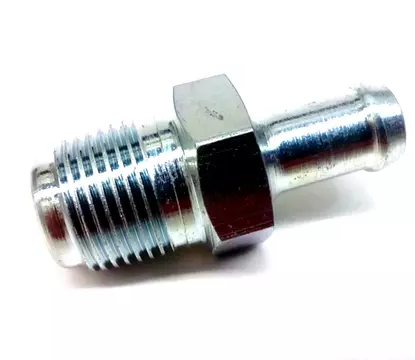
The PCV valve is a simple component that is a part of your Subaru’s emission control system. It is a one-way valve that manages the flow of blow-by gases. These are a mixture of unburned fuel and exhaust that leaks past the pistons into the crankcase.
- It is a plastic or metal bolt-like component with a spring-loaded plunger inside.
- It helps recycle gases back into the combustion chamber rather than releasing them into the atmosphere.
- By venting these gases, it prevents the buildup of sludge and moisture inside your engine.
What Does the PCV Valve Do?
The primary job of the PCV valve is to regulate the pressure inside the crankcase. When the valve becomes clogged or stuck, that pressure has nowhere to go. This internal pressure puts immense strain on your engine’s seals and gaskets.
- By relieving pressure, the PCV valve protects the main seals and valve cover gaskets from blowing out.
- When stuck open, it can suck oil mist directly into the intake manifold to be burned; when stuck closed, it forces oil out through seals.
A properly functioning valve ensures your air-fuel mixture remains consistent for better idling and acceleration, but any excessive pressure from a failed PCV valve can force oil past seals, leading to external leaks and internal oil burning.
Can I Replace a PCV Valve Myself?
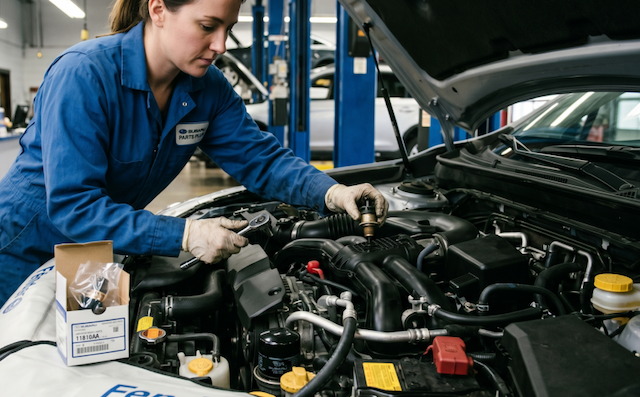
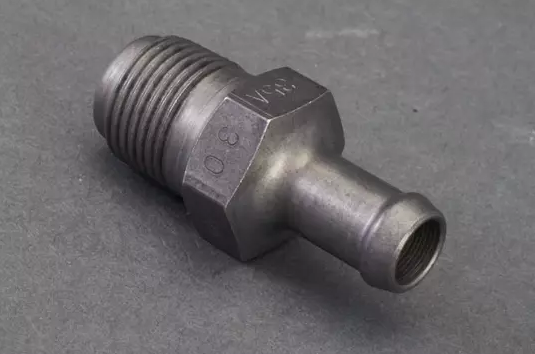
One of the best things about the PCV valve is that it's a very easy DIY repair job. For most Subaru models, the valve is easily accessible on top of the engine block or threaded into the intake manifold. Be sure you have a trusted tutorial and take photos along the way just in case.
- Basic Tools: You typically only need a socket wrench or deep-well socket to remove the old valve.
- Quick Fix: The entire process usually takes less than 20 minutes, even for a beginner.
- Maintenance Schedule: To avoid oil consumption issues, it's a good idea to inspect or replace the valve every 30,000 to 50,000 miles.
How Much Does a Subaru PCV Valve Cost?

Replacing a PCV valve is very affordable. While aftermarket parts exist, using OEM Subaru parts ensures the spring tension and flow rate are perfectly calibrated for your engine.
Genuine Subaru PCV valves are not costly items, especially when you source them from us at SubaruPartsPlus.com at wholesale prices. Spending a few dollars on this part can save you a lot of money in gasket repairs later on. Check out the links below to find the most current pricing for several of our most popular replacement PCV valves:
| Popular PCV Valves from SubaruPartsPlus.com | |
|---|---|
| Model Year | Subaru Model/Engine |
| 2009-2014 | Impreza/Forester |
| 2010-2012 | Legacy/Outback |
| 2014-2015 | Forester |
| 2011-2020 | BRZ/Impreza/Forester/Legacy/Crosstrek |
| 2000-2001 | Forester/Impreza/Outback/Baja/Legacy |
Choose Subaru Parts Plus For Your OEM Components
If your Subaru is using too much oil, don't panic. Start with the basics: check for a stuck PCV valve. This small component regulates crankcase pressure, and if it fails it can lead to costly leaks and oil burning. Replacing it is a simple DIY task that costs very little but offers lasting protection for your engine.
At Subaru Parts Plus, we are dedicated to helping you keep your vehicle on the road longer. We offer wholesale pricing on all genuine parts and provide fast shipping to get your Subaru back in peak condition. Get in touch if you have any questions, and order your replacement PCV valve today!