

What Is A Suspension Control Arm And Why Is It Important?
When it comes to your vehicle's suspension system, the control arm plays a crucial role in ensuring a smooth and stable ride. But what exactly is a suspension control arm, and why is it so important?
In this post, we'll cover the basics of control arms, including their function, evolution, and construction.
What Is A Suspension Control Arm?
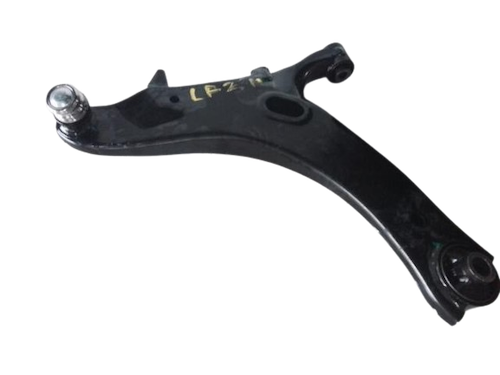
A suspension control arm, often referred to simply as a "control arm," is a hinged suspension link between the chassis and the suspension upright or hub that carries the wheel. Its primary job is to control the motion of the wheels, ensuring they stay aligned and connected to the vehicle body while absorbing the shocks and bumps from the road.
Function Of The Control Arm
The control arm is pivotal in maintaining the vehicle's stability and handling, ensuring that the tires maintain optimal contact with the road surface. To do this, it performs the following functions:
- Stability: It keeps the wheels aligned to the vehicle's body to keep it stable.
- Control: Maintains proper wheel motion and steering control by keeping the tire's contact patch firmly planted on the road surface.
- Comfort: Maximizes suspension geometry to absorb road shocks ensuring a smoother ride.
Evolution Of Control Arms: Modern vs. Old Versions
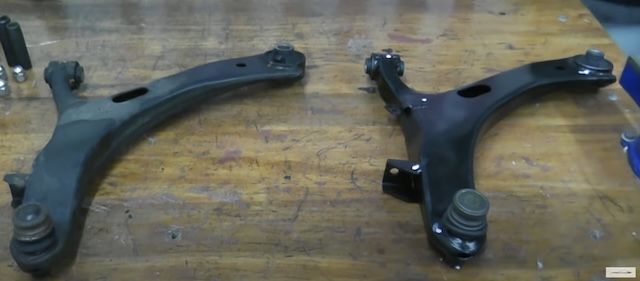
Image Credit: CarsNToys
Over the years, control arms have undergone significant changes. Traditional control arms were often made of heavy steel, which, while durable, added substantial weight to the vehicle. Modern control arms are typically made from lighter, yet strong materials like aluminum or high-strength steel. This evolution has led to improved efficiency and better overall performance.
Additionally, modern control arms often incorporate advanced designs and materials that enhance durability and longevity. For example, some contemporary control arms feature integrated bushings and ball joints that provide improved flexibility and reduce wear over time.
Materials Used in Control Arms
Depending on the vehicle and its purpose, control arms can be made out of one or more of the following materials:
- Steel: Durable and strong, traditionally used in older control arms.
- Aluminum: Lightweight and resistant to corrosion, common in modern control arms.
- Composite Materials: Advanced composites provide strength while being even lighter than aluminum.
The choice of material impacts the control arm's weight, durability, and performance. Modern materials like aluminum and composites are preferred for their combination of strength and lightness.
Location And Appearance Of Control Arms
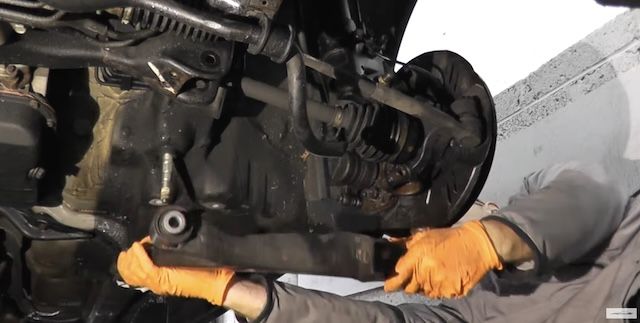
Image Credit: CarsNToys
Control arms are part of a vehicle's suspension system. Typically, they are positioned at the front suspension but can also be found in the rear, depending on the vehicle design. Visually, control arms resemble a wishbone or an "A" shape, earning them the nickname "A-arms." They connect the wheel hub to the vehicle frame through ball joints and bushings.
In a typical Subaru model, control arms are crafted to ensure precise handling and superior performance. Subaru control arms are designed to withstand the rigors of both on-road and off-road driving, providing reliability and durability.
Genuine OEM Control Arms From Subaru Parts Plus
If you need to replace a control arm on your Subaru, your best bet is Subaru Parts Plus. When you buy from us, you get the following:
- OEM parts backed by a Subaru warranty
- Expert advice from our experienced, knowledgeable associates
- Fast shipping to your door
We are a family-owned, authorized dealer of OEM Subaru parts. All parts we sell are backed by a Subarus manufacturer warranty. If you need help, contact us online or call us at 1-888-294-4979.